YouTube comments
How to Analyze YouTube Comments: A Practical Guide
YouTube comments are more than reactions to a finished video. Among praise, one-off opinions, and thread replies, viewers leave recurring questions and concrete requests for the next upload. A good analysis turns that stream of text into usable topics.
In short
The best comment analysis shows which statements recur, how strong the demand is, and what concrete video could come from it.
What a useful comment analysis should do
The key question is not which comment has the most likes. It is whether several independent viewers express the same need in their own words. That is the point at which a pattern becomes strong enough to inform a video plan.
A reliable process separates recurring topics from one-off opinions, accounts for different viewers, and shows original comments as evidence.
- recurring meaning rather than isolated keywords
- different viewers rather than repeated comments
- demand signals and evidence rather than a black-box score
A useful five-step workflow
Start by defining the comment section of one video. Treat thread replies separately because they are often conversations between viewers, not direct signals about what the channel should explain next.
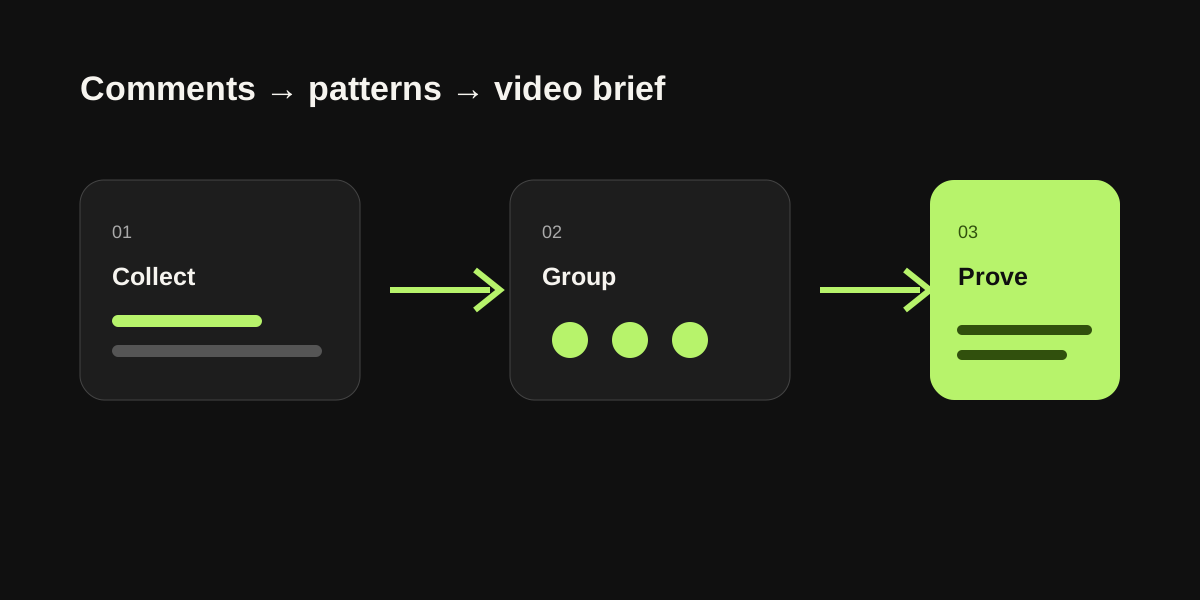
Then group similar statements. Only after that should topics be labelled, prioritised, and turned into video ideas. The order matters: the idea should come from the comments, not be projected onto them afterwards.
- collect comments and identify top-level comments
- filter irrelevant and duplicate statements
- group similar statements into topics
- prioritise topics by demand and signal strength
- show evidence and a filmable video idea
Why likes alone are not enough
A highly liked comment can be a strong signal, but it is not automatically a content request. It may be agreement, a joke, or a side discussion. Independent repetition is often more informative than one outlier with a high like count.
Likes still matter: they show which recurring statements received the most support. They should add context to the text, not replace it.
Manual analysis or a tool?
For a small comment section, a spreadsheet with statement, category, frequency, and evidence link can be enough. With hundreds of comments, manual grouping becomes inconsistent: the same question is phrased in many ways and one-off opinions can look more important than they are.
A tool is useful when it makes its output inspectable. The valuable output is not a polished score, but a prioritised topic with demand signals and original comments.
An example of a meaningful pattern
Imagine several viewers asking why their result looks different after following a tutorial. One asks about the right setting, another requests a comparison, and a third describes a specific error. The wording is different, but the shared need may be the same: one step in the process is not clear enough.
Keep the range of wording alongside the topic label. This prevents you from searching only for identical terms. For planning, also record whether the need belongs in one chapter or deserves a dedicated video.
Keep the result inspectable
For every prioritised topic, record four things: a neutral summary, the number of independent viewers, representative original comments, and a possible answer. This turns analysis into an editorial decision you can review later.
Compare the predictions with actual performance after a few uploads. That feedback shows which community signals were reliable and where comments may have been over-interpreted. It improves the next analysis instead of treating one result as absolute truth.
A checklist for your next analysis
Start by defining the decision you want to make: a new video, an additional chapter, or a clearer explanation. Collect the relevant comments and record the video and thread they came from. Without that context, an apparently frequent topic can be interpreted incorrectly.
Review every result against the original voices. Ask whether independent viewers really mean the same thing, whether the answer would help more people, and whether you can explain it clearly. Only when all three questions have a positive answer should the topic enter your editorial calendar.
- write the need neutrally
- count independent viewers
- save original evidence
- choose an answer format
- review the result after publishing
Turn analysis into a decision
After grouping, take time to challenge the result. If a topic appears often but only in replies inside one thread, it may be a conversation rather than a broad need. If several top-level comments describe the same gap independently, the signal is much stronger.
Write down one clear decision: answer the topic in a video, add it to an existing video, or keep monitoring it. These options prevent every interesting observation from becoming a production assignment while keeping useful topics available for later review.
Frequently asked questions
How do you analyse YouTube comments effectively?
Collect comments from one video, separate top-level comments from replies, group statements by meaning, and prioritise recurring topics with original evidence. Use likes as context rather than as the only signal.
How many YouTube comments should you analyse?
There is no universal number. Analyse enough comments to distinguish repetition from one-off opinions. For large comment sections, use automation for the first pass and review the strongest evidence yourself.
What makes a comment analysis reliable?
A reliable analysis shows how many independent viewers mention a topic, which original comments support it, and what concrete video could answer the need.